Maruti Suzuki Celerio

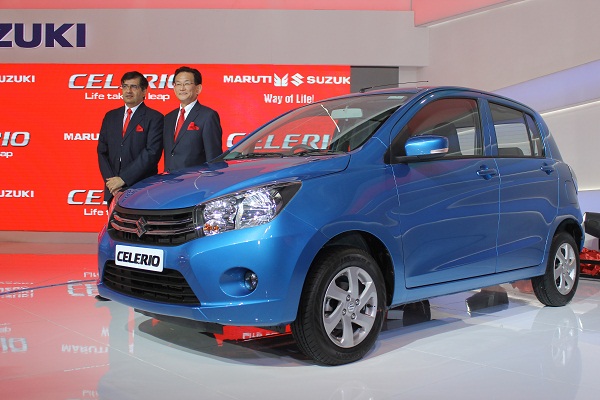
It is decent and warranted a proper platform, they have put together an all-new car, christened ‘Celerio’. It means ‘celestial river’, or so we came to know when a fellow journalist inquired the source of the unique name. No connection, but post the initial skepticism, it is an easy name to get used to.

Pretty much like the car.

Coming to the technology part of it, automatic gearboxes have traditionally known to be less fuel-efficient than their manual siblings. Which single-handedly has kept many Indians away from what would be an automatic choice for our troubled traffic conditions. Traditionally, they have also been expensive to build and maintain, which kind of hammered the final nail into the coffin. So, to get away from convention, Maruti engineers tried something unconventional, yet, simple. So, what the Celerio gets is an Auto Gear Shift (AGS), which is inherently a five-speed manual transmission like any other, but this is coupled to a unit that hydraulically controls its working. This unit sits right on top of the transmission and eradicates the presence of a manual clutch. So, what the driver needs to do is use the gearshift like in a traditional automatic, and simply put it in D (drive), N (neutral) or R (reverse). There is no cog for park – like there isn’t in a manual box – and you have to yank the good-old handbrake for that.

Not surprisingly, the box works like a manual which means shifts are quite noticeable. Especially upshifts, as the unit tries hard to keep pace with your throttle position. Power comes from a one-litre next-gen K-series three-cylinder unit. It feels surprisingly smooth and free-revving in the five-speed manual version of the Celerio but is always on the leash in the automatic version. The AGS isn’t meant for spirited driving like in the most expensive German cars, but in our regular Indian traffic, it makes for a stress-free routine. Floor it, and you will hear the engine cry out in protest and the gearbox climb through the ratios with very pronounced pauses. If you are an expert of sorts, then, thankfully, you can shift gears quicker with a manual change option. This is quite welcome and makes the Celerio less restricted to drive on the limit when you get a chance on the open highways.

But the best part of this gearbox is the fuel-efficiency. ARAI verifies it at upwards of 21kpl, but in the real world, the on-board computer was indicating over 18kpl, which for an automatic is downright brilliant. In fact, the manual version, that we drove later (albeit on the limit), was indicating close to 15kpl. Maruti claims maintenance will be low too, simply because the ’box is essentially not very different from a manual.

Just like its transmission, the Celerio doesn’t try to be overtly extravagant. It is designed to be a conventional-looking hatch that looks like a cross between the shapes of an Estilo and an A-Star. It isn’t Grand i10 pretty, but keeps things pleasant with a wide prominent grille and large headlamps. Interiors are spacious and there is enough legroom and headroom that belies its tiny proportions. Ride is supple and steering feel is a good mix of being not too heavy or too light. Plus, it is reasonably pointy and you would be confident enough to push it in between lanes while overtaking. Yes, overtaking you can do reasonably easily with the manual version, but for the automatic try not to be too heroic. Strangely, in a bid to keep costs down and make the automatic more accessible to buyers, Maruti isn’t offering it in the top-spec ZXI. That comes only in the manual version where you get dashboard-integrated music system, steering-mounted audio controls, ABS and even Bluetooth. Although it does say if customers demand they can offer AGS in the ZXi at a later date, which should make it a more wholesome buy.

But even otherwise, the Celerio AGS is a welcome break from the mundane and offers a very practical automatic gear-shifting option in the budget segment. It isn’t an automatic in the true sense, so it doesn’t offer uninhibited levels of performance, but offers similar levels of convenience. More importantly, it offsets its shortcomings by offering unmatched fuel efficiency, which does make many of us sit up and take notice. After all, useable and practical alternatives are not always available for the aam aadmi.

The numbers
3cyl, 998cc, 67bhp, 90Nm, 5M/5AGS, boot capacity: 235l, fuel tank: 35l, kerb weight: 810-830kg

Pros: Passenger space, seats, fuel efficiency (AGS variant), performance (manual variant)

Cons: AGS not enjoyable on highway, doesn’t get full feature list variant

The verdict

A frugal and practical city car with the added benefit of automatic gearbox-like comfort. Not a fun car, but a boon for many mundane lives.
Alto 800 VXi

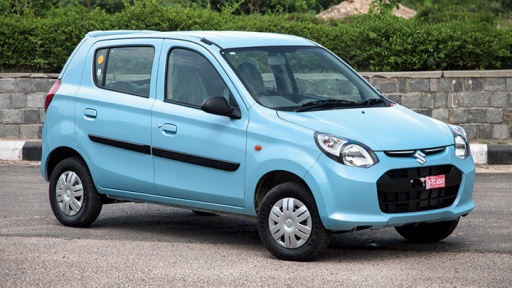
For years now, the older 800cc Alto has been on a spree of sorts, setting and breaking sales records. But by now, it’s been on the road for so long, it’s in urgent need of some sprucing up. With the Alto 800, launched last November, it got new styling but it wasn’t enough to set any records. Primarily because the new styling didn’t prove to be as popular as Maruti would’ve liked, and the car lacked some essential features – like central locking and an audio system.

But now, there’s a new top-of-the-line variant, the VXi, that offers both those as standard, plus a rear spoiler and side mouldings. What is skips, annoyingly enough, is a keyhole on the front left door. Why would you do that, Maruti?

The integrated audio system gets two speakers. With that, the Indian car market has evolved to a point where even a super-compact hatch (well, a variant, at least) gets an audio system, without the need to go to the aftermarket. The VXi will appeal to anyone who looked at the Hyundai Eon only because it was heavier on features.

The numbers
3cyl, 796cc petrol, 47bhp, 69Nm, 5M, FWD, 0-100kph: 16.86sec, city kpl: 14.4, highway kpl: 18.8, Rs 3.58 lakh (ex-Mumbai)

The verdict
Alto 800’s new variant gets features it sorely lacked. Is better value now.

Alto K10

When it comes to entry-level hatchbacks, very few cars can match the Maruti Alto. The Alto K10 has sold around 4.3 lakh units since its launch in 2010, and the total number of Altos sold in the country is a whopping 26 lakh. Not surprisingly, the Alto is the highest-selling product in Maruti’s portfolio. Now, Maruti has made the competent hatchback even more desirable by adding a touch of convenience in the form of an automated manual gearbox.

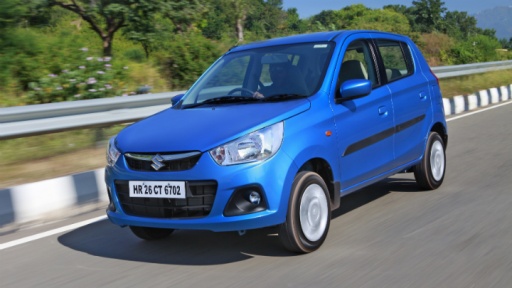
But before we get to that, lets take a walk around the Alto first. To begin with, the new Alto K10 looks more mature compared to its predecessor. Up front, Maruti has attempted to give the hatchback a wider stance with chrome inserts on that tiny grille, and new swept-back headlamps with silver inserts. The exterior changes are rounded off with new cuts and creases along with new-look mirrors. Some styling cues at the rear establish the car’s connection with the smaller Alto 800.

The marginally taller and wider Alto K10 now offers a roomier experience than before and feels a tad more premium, thanks to the new upholstery and the silver inserts in the curvaceous dual-tone dashboard.

The top-end VXi variant packs features such as a piano-black audio system that’s USB- and aux-compatible, front power windows, central locking and fog lamps, while the VXi (o) gets keyless entry, a driver’s side airbag and body-coloured mirrors.

Although the front seats have recesses at the back to give rear occupants more space, tall folks are still likely to find the rear a little too snug. Maruti claims that the Alto can seat five adults, but we believe that’s going to be a tight squeeze, as the tiny rear bench isn’t very accommodating.

At the heart of this machine is Maruti’s all-aluminium 1-litre K-Next petrol engine. The improved 998cc, 3-cylinder boasts a higher compression ratio, and the new drive-by-wire tech coupled with max output of 67bhp and 90Nm makes for a zippy drive. The engine is a strongpoint of this little hatchback. Power delivery is refined, and it likes being revved hard, in both automatic and manual driving modes, all the way to its 6500rpm redline.

The 5-speed Auto Gear Shift transmission ably complements the engine. Cruising around at 80kph in fifth, the engine felt composed, with the needle hovering at 2,500rpm. The Alto K10 responds well to enthusiastic driving as well, though shifts from first and second gears tend to be a bit jerky. But, we found the downshifts to be quite impressive and, when pushed hard, it confidently holds onto gears. At the wheel, all-round visibility is good, and there’s enough grunt from the motor in both driving modes.

The Alto’s steering is light, and it is an agile car, which makes both city and highway drives a breeze. Thanks to a sorted suspension setup, the K10 delivers a comfortable ride, despite those spindly 155/65 R13 tyres.

The K10 holds its line quite well over rough roads, too. The ventilated discs up front and the drums at the back are capable of bringing the K10 to a rapid halt. There are six variants of the new Alto on offer – LX, LXi, LXi (CNG), VXi, VXi (AGS) and VXi (O), that are differentiated by levels of trim and equipment.

The price for the new Alto K10 AGS starts from ₹4.06 lakh (ex-Showroom, Mumbai), which would make it around Rs. 40,000 cheaper than the Celerio AMT. So, will the new K10 AGS cannibalise the bigger hatchback’s sales? There’s a high possibility of that happening, but, then, it also gives the customers a wider range to choose from. And that’s never a bad thing.

The numbers
3cyl, 998cc, 67bhp, 90Nm, 5A, Boot: 177l, fuel tank: 35 litres, 24.7kpl (claimed).

The verdict

One of the best value-for-money cars in its segment has upped its game. Engine and gearbox are the highlights. The convenience of an automatic gearbox makes it even more desirable